

NVIDIA now wants an AI factory to arrive the way a ready meal does. Built, wired, piped and tested somewhere else, then switched on in as little as 14 days once the site's utilities are ready.
The method is the same as March. NVIDIA is the best-informed source on NVIDIA and the least objective one. So every claim from the keynote, the seventeen releases on the day and the week-long European tour gets checked against the paperwork. Where the stage and the spec sheet disagree, both numbers are printed.
Seven months after GTC San Jose, every March promise is checked against what happened next. The San Jose breakdown is Issue #97. The two keynotes sit side by side in the San Jose to Berlin section below.
No PR.
No spin.
Just what was said, what shipped, what slipped, and what it means for the people who build, buy and fund GPU infrastructure.
Watch The Keynote
About 20 minutes in, Huang was showing the Vera Rubin hardware. Protesters stood on their chairs with a Greenpeace banner reading "Nvidia, clean up your dirty business!" One shouted: "Jensen, what about the technology that was found in Russian drones? Those were Nvidia chips. What are you doing about that?" Another asked about environmental destruction. Huang told security to go easy ("Everybody has a chance to say something"), called it "all important issues, but let me get through my keynote" and carried on. NVIDIA's livestream barely caught it and its live blog left it out.
The drones point has a paper trail. Ukraine says NVIDIA Jetson Orin modules have turned up in Russian drones and in the S-71 cruise missile. In August, forensic teams reported Jetson Orin modules inside a Russian AI drone that killed three civilians. NVIDIA told Tom's Hardware before Berlin that Jetson Orin modules are "consumer-grade products sold to students, developers, and startups". It says it does not sell them in Russia, did not design them for military use and cannot track them once resold. In March, Greenpeace USA drove a billboard truck around GTC San Jose. Seven months later it got a seat inside.
DSX POD: The AI Factory Ships in a Box
The biggest delay in an AI factory is no longer the chips. It is the months between the racks arriving and the first token.
NVIDIA DSX POD is a reference design for complete Vera Rubin AI factories, built by partners inside modular containers and validated before they leave the factory.
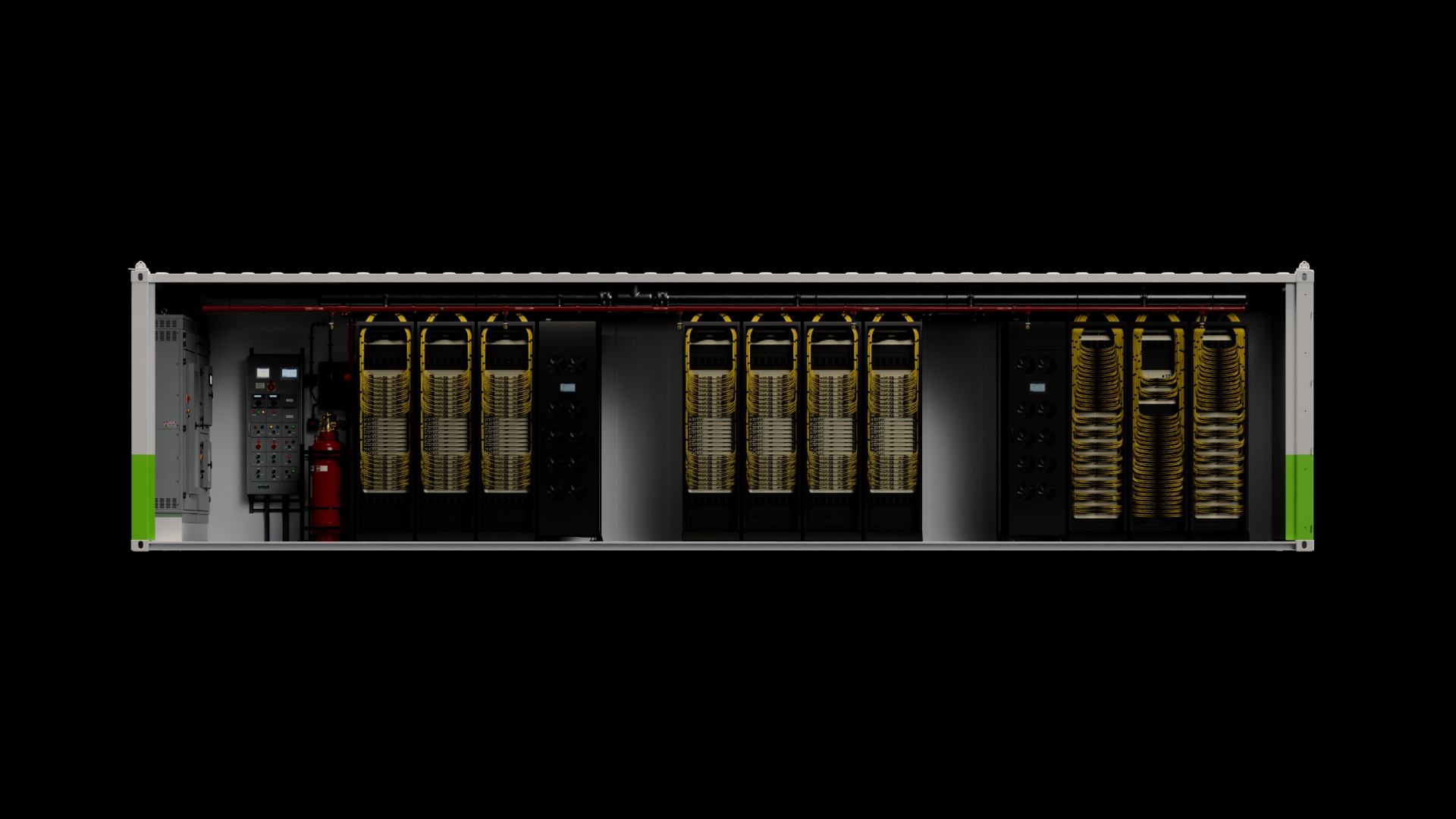
What goes in the box:
Compute. Vera Rubin NVL72 racks. On stage, Huang described seven liquid-cooled compute racks per POD joined by 17 kilometres of Spectrum-X cable. Neither figure appears in the release or the technical blog.
Integration. Partners complete rack-to-rack cabling, wiring, piping and functional validation before shipment.
Power. A standard 800 VDC input.
Cooling. Dry coolers in place of evaporative towers (see Power and Water below).
The pitch is time. NVIDIA's release says DSX POD cuts deployment from six months to as little as 14 days, once site utilities are ready. Huang's stage version measured something slightly different, installation to tokens, and put it at "4 to 5 months down to about a month".
He did the maths out loud. A gigawatt factory costs about $50 billion and should earn about $40 billion a year, so a three-month delay costs $10 billion of revenue. "$10 billion worth of revenues will make anybody anxious."
NVIDIA's own number is higher. Its 1 October blog says "each megawatt factory costs roughly $60 million", about $60 billion a gigawatt. Huang said $60 billion himself on the Q2 call in August. So the $50 billion was almost certainly a slip of the tongue. Most chief executives misspeak by a decimal point. Huang misspoke by about 167 megawatts.
The $40 billion needs the same care. On the August call it was NVIDIA's own revenue opportunity per gigawatt of Vera Rubin, not the customer's annual token revenue. In San Jose it was the 15-year cost of land, power and shell.

Source: GTC San Jose keynote, 16 Mar 2026 (via CloudZero); NVIDIA Q2 FY27 earnings call, 26 Aug 2026; NVIDIA blog, 1 Oct 2026. The blog's $60m per MW is converted at 1,000 MW per GW. The $50bn said on stage in Berlin is left out as a slip.
Seventeen partners will build it: Anduril, Armada, Bull, Crusoe, DayOne, Dell, Delta, Eaton, Foxconn (Ingrasys), GIGABYTE, HPE, Lenovo, Pegatron, QCT, Schneider Electric, Vertiv and Wistron. Anduril and Armada on the list point to where some of these containers are headed: places with no data centre at all.
The read: NVIDIA rebuilt the supply chain once with NVL72, moving rack assembly into the factory. DSX POD does the same for the data hall. Every month of commissioning that moves into a partner's factory is margin that moves with it. None of it touches the long pole. NVIDIA starts the 14-day clock once the site's power is connected, and in Europe's main data centre hubs the wait for that connection can reach about ten years, according to the IEA. A container can arrive in a fortnight and then wait for the wire.
DSX POD deliveries start in early 2027.
Vera Rubin: Shipping, and the 30x Has a Footnote
"Full production" was announced at CES, again in March, again in May and again in Berlin. The new part is that racks are now running at customers.
Production shipments of Vera Rubin began in August, inside the H2 2026 window promised in March. By 26 August, racks were running at CoreWeave, Google Cloud, Microsoft Azure, Oracle Cloud Infrastructure and Nebius. NVIDIA expects Vera Rubin to be about 20% of data centre revenue in Q3 FY27.
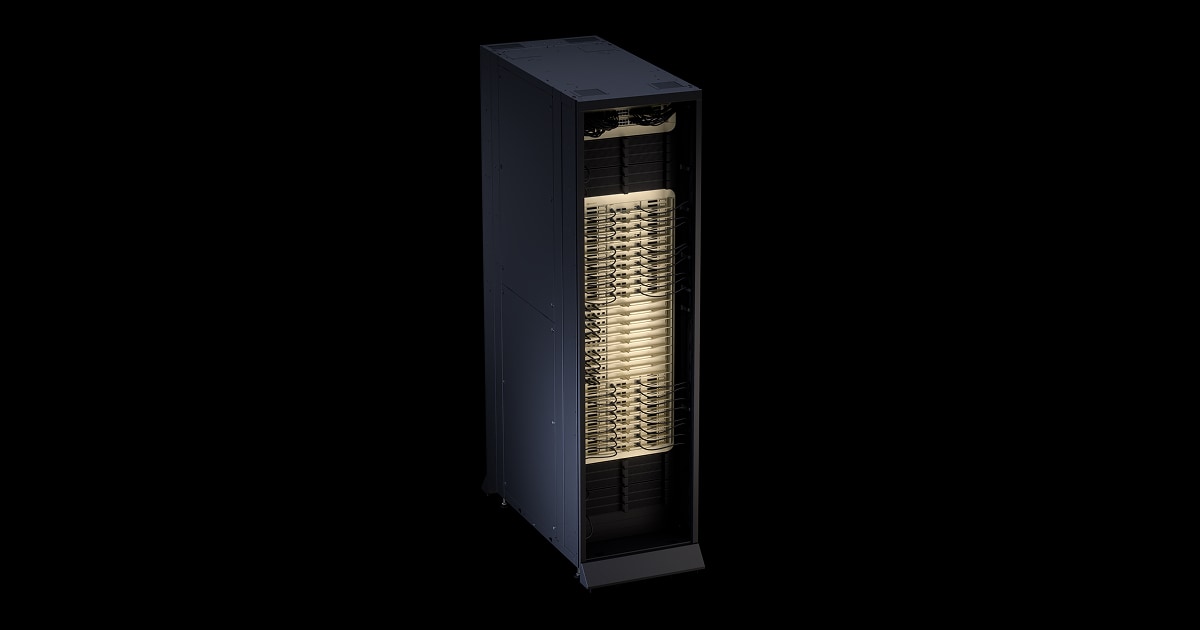
The spec, from NVIDIA's product page, not the stage:
Rubin GPU. 50 PF NVFP4 inference, 35 PF NVFP4 training, 17.5 PF FP8/FP6 training. Huang said "20 petaflops" per GPU on stage, which matches none of them.
NVL72 rack. 72 Rubin GPUs, 36 Vera CPUs, 3,600 PF NVFP4 inference.
Assembly. Compute tray assembly falls from nearly two hours on Grace Blackwell to five minutes. Cable-free, 100% liquid cooled.
Vera CPU. 88 custom Olympus cores with a 10-wide fetch and decode front end (Huang said eight), second-generation LPDDR5X at up to 1.2 TB/s and 1.5 TB, and a 3.4 TB/s coherency fabric. Huang called it "the world's first LPDDR memory system". NVIDIA's own blog calls it the second generation. Grace was the first.
Spectrum-X Ethernet Photonics. The co-packaged optics switch is in production with 200 Gb/s SerDes, in configurations up to 512 ports of 200 Gb/s.
Groq 3 LPX. The decode accelerator went into full production on 24 August. Nebius is the first cloud to take it.
Then the headline: Vera Rubin is "another 30 times greater than Blackwell in just 2 years' time". The written claim is narrower. NVIDIA says Vera Rubin NVL72 delivers over 30x higher throughput per megawatt than GB300 NVL72, and up to 45x lower cost per million tokens, on one model (DeepSeek V4 Pro) using SemiAnalysis benchmark data. On the August call, the same comparison came with 35x lower token cost. The product page, against GB200, says 10x.
Every one of those numbers may be true. They are not the same number, and "30 times greater" is not the whole sentence.
Huang's case for why the hardware holds its value came in two parts: the only general-purpose accelerated architecture, and a full-stack factory most companies could never build themselves. His summary: "Fungible, durable, productive." The same three words title NVIDIA's 1 October blog.
The read: that is NVIDIA's answer to the two questions allocators keep asking, whether custom chips win and how fast a GPU depreciates. Fungible means it can run next year's workload. Durable means the software keeps improving after purchase. Neither is a depreciation schedule. This market already has four kinds of depreciation: technological, accounting, financial, and NVIDIA's, which depends on how much NVIDIA wants you to buy the next generation. "Fungible, durable" is a pitch about the fourth.
Power and Water: Max-Q Becomes MaxLPS
In March, NVIDIA's power software promised more factory in the same power. In October, it promises the same factory on less power.
DSX MaxLPS allocates power dynamically within a factory's provisioned budget, "helping operators generate the same number of tokens with up to 30% less power". In San Jose the same idea was called DSX Max-Q and promised "the deployment of 30% more AI infrastructure within a fixed-power data center". The release still notes operators can spend the saving on more GPUs.
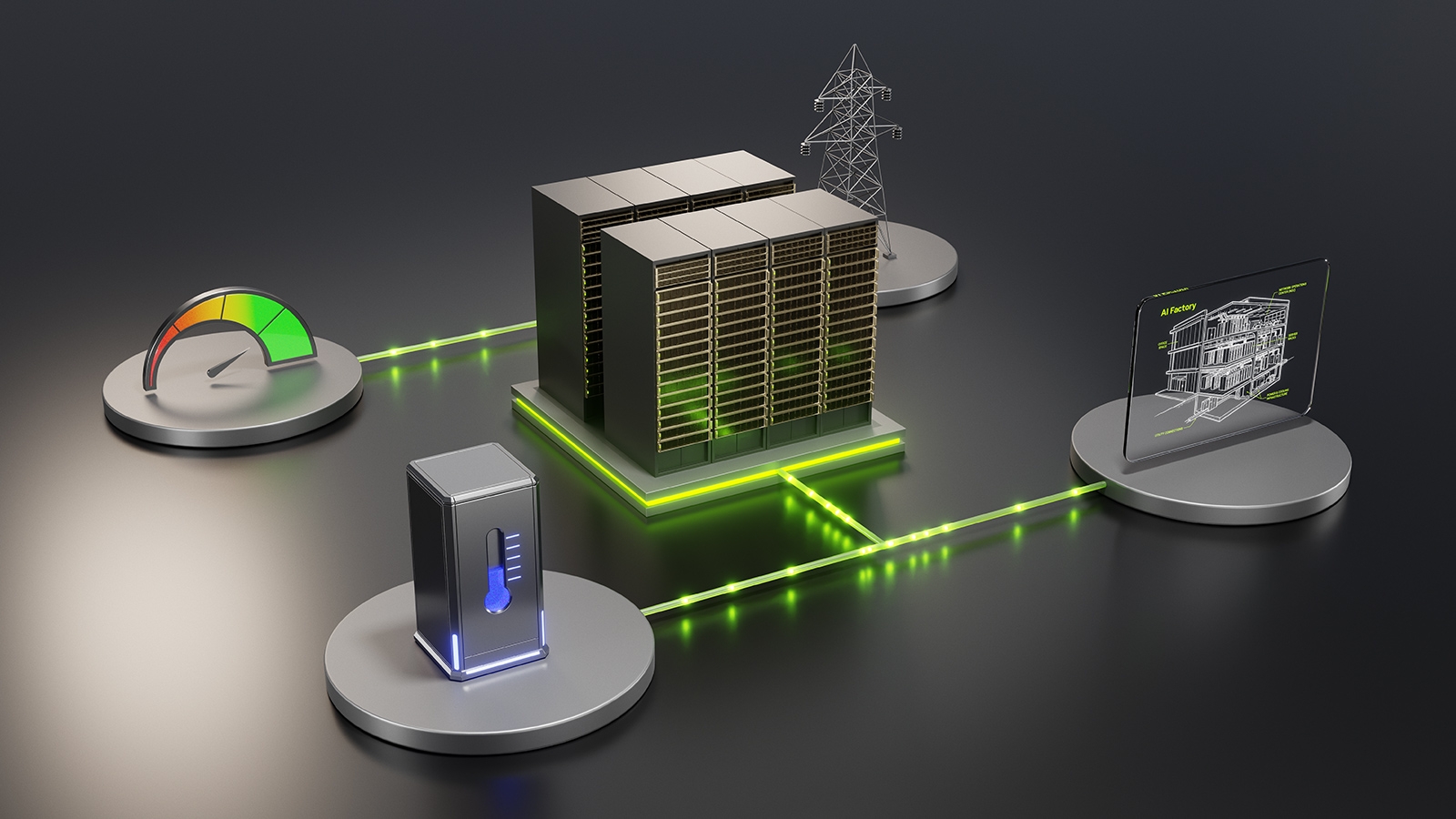
The measured results so far, from the same release:
Lambda (HGX B200): 24% more cluster token throughput and 19% more GPU capacity in a fixed power budget.
Nscale (four GB300 NVL72 racks, 264 kW): 49% higher inference throughput and 37% more managed GPU capacity.
Neither test ran on Vera Rubin. One ran on four racks.
Water is the European angle. Vera Rubin supports 100% liquid cooling with coolant up to 45°C, which lets dry coolers dump heat into air instead of evaporating water. At 2 GW, NVIDIA says DSX can save 54 million litres of water a day against cooling towers, the daily use of 180,000 households. The release adds the caveat the stage left out: "Local climate determines whether supplemental mechanical cooling is needed during the hottest periods."
Partners named on facility design: PTC (SimReady assets), Dassault Systèmes and Vertiv (digital twins), Schneider Electric with AVEVA (power and cooling reference designs), Siemens (DSX Sim) and Procore (construction management). ABB, Eaton, GE Vernova, Hitachi Energy, Siemens Energy and Trane are also in the release. Huang named Jacobs on stage. The release does not.
The read: a rename from "more" to "less" is a change of audience. Max-Q was written for operators who want more GPUs per megawatt. MaxLPS is written for European grid operators and planning officers who want fewer megawatts per GPU.
The Supply Chain: Capacity Is the Constraint
"Demand is extraordinary. Capacity is the constraint." Huang's line, in a release that got no stage time.
NVIDIA's supply chain release lists where the next bottlenecks are being paid down:
Substrates. Capacity up 2.5x over three years.
Interposers. Amkor capacity up more than 300% by the end of 2028.
Test. A $1.1 billion capacity reservation advance to KYEC for new US testing facilities.
Co-packaged optics. SPIL targeting a 15x increase in optical-engine capacity by mid-2027.
The read: a $1.1 billion prepayment for test capacity is NVIDIA financing its own supply chain. It is the same move NVIDIA makes on the demand side with neocloud equity. NVIDIA sits on every side of this trade. Prepaying for capacity is what customers do when they are stuck in a queue. NVIDIA is now in the queue at its own suppliers.
The Agent, in Five Parts
Huang built the middle of the keynote around one diagram. It is the clearest statement yet of what NVIDIA thinks it is selling into.
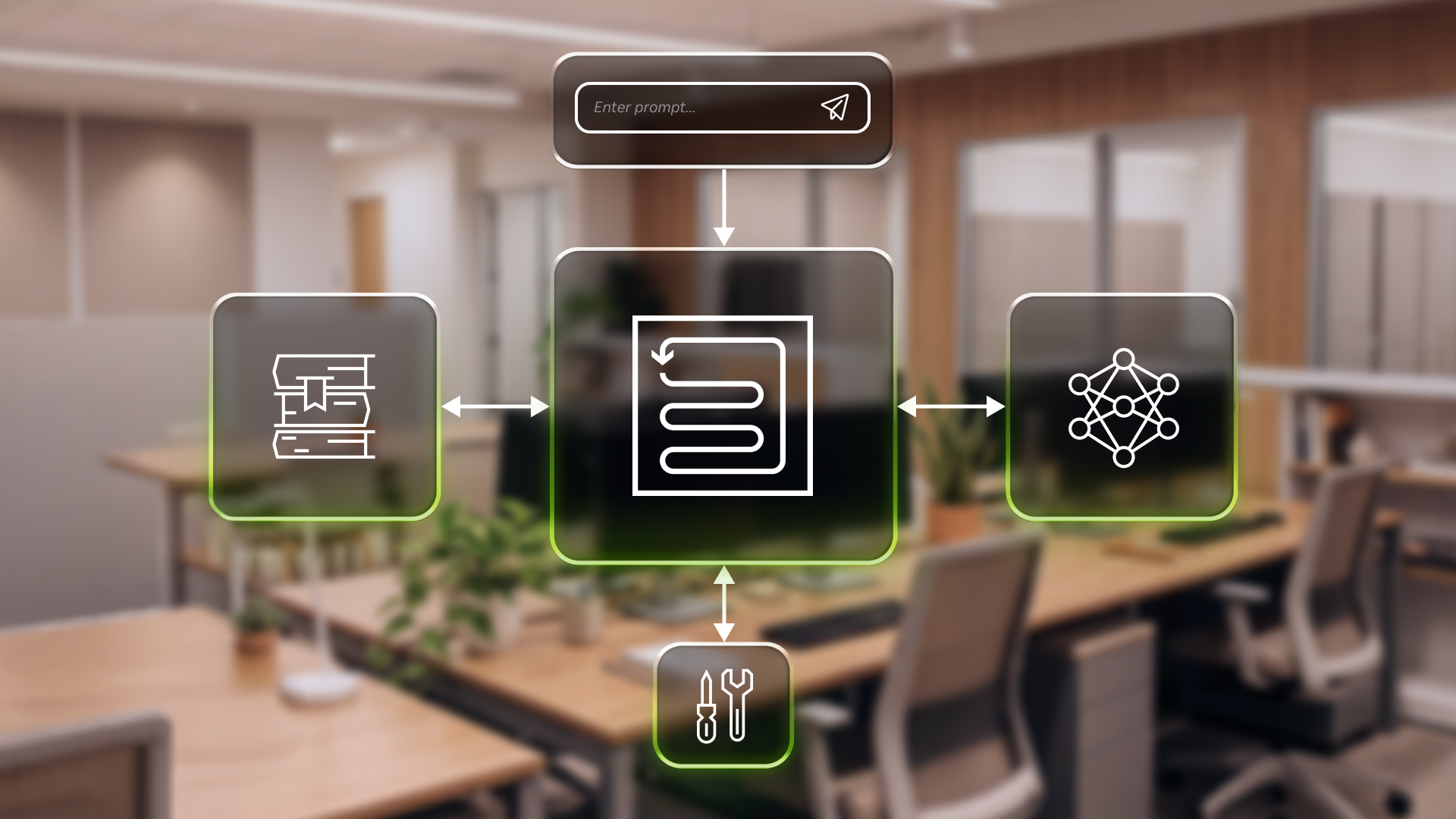
An agent, in NVIDIA's own words, has five elements: "a model, a harness that orchestrates its work and memory, a sandbox that isolates the harness, knowledge and tools."
Each element maps to a computer in the factory:
Model. Runs on Rubin GPUs. "The agent has to think, and that's where the model comes in."
Harness. The orchestration layer, which Huang called the agent's "exoskeleton". Runs on Vera CPUs.
Sandbox. OpenShell, the secure runtime (see OpenShell and Sentry below).
Knowledge. The company's structured and unstructured data, served through retrieval models and data libraries (see Open Models and Knowledge and Tools below).
Tools. CUDA-X libraries: solvers, simulators, data engines (see Knowledge and Tools below).
The commercial logic sits in one stage line: "These AI factories don't just run models anymore. They run entire agents." A factory that runs models needs GPUs. A factory that runs agents needs GPUs, CPUs, DPUs, storage and a security layer, and NVIDIA now sells all five.
On how hard it is to build one, Huang was cheerful: "The way you build an agent is you ask an agent to build it for you." The buyer will never see any of this. Nobody using an agent cares which chip runs which part, which is exactly why NVIDIA wants to sell all five.
Open Models: Nemotron 3.5, Kumo and the Recipe Book
"These models are not necessarily the frontier of frontiers." Huang, on his own language models. Unusually candid for a keynote.
The pitch instead: open weights, open data and the training recipe, so a company can post-train its own. The Berlin model drop:
Nemotron 3.5 Super VL. 120B-parameter mixture of experts with 12B active, text and image, inputs up to 1M tokens, OpenMDW-1.1 licence. Trained on about 26 trillion tokens. Launched 15 October.
Nemotron 3.5 Bolt. 74B total, 9B active, native 2-bit quantisation to fit 24GB. A 4GB version is due 23 October.
Nemotron Retriever. Embed, rerank and parse models. "Top of leaderboard" means first among dense models on ViDoRe v3.1 for embedding (61.17 nDCG@10) and reranking (60.49), and first under 1B on ParseBench (75.20).
Kumo. Open-weight foundation models for tabular, relational, time-series and forecasting data, plus the Apache 2.0 Kumo Engine. Kumo comes from Kumo AI, which Fortune reported NVIDIA acquired in June. Terms undisclosed; NVIDIA declined to comment.
Cosmos 3.5 world models, with post-training tools and Cosmos Data Factory.
Alpamayo 2 Edge. A 2-billion-parameter driving reasoning model for DRIVE AGX Thor, on GitHub and Hugging Face "later this month".
BioNeMo RFD4-Proteina. Built with the Baker Lab, about 13x faster than RFdiffusion3 on a 200-amino-acid benchmark.
Ising. Quantum calibration and error-correction models. IQM, SEEQC and AWS are users.
The customisation results NVIDIA showed, with what each one measured:
AI21 with Alice: Super VL post-trained for threat intelligence, 41% more accurate.
Scale AI with Skydance: a vendor-credit agent where inference cost "will decrease by 40x and latency by 5x". Forward-looking, and the same NVIDIA page says 10x latency in its summary.
Baseten with CodeRabbit: code-review routing, serving cost down 50.4%, post-training under $100. Published in August.
Trajectory with Harvey: Nemotron 3 Ultra on Harvey's legal benchmark, rubric pass up from 52% to 83%, against 85% for Claude Opus 4.6. Published in June.
Palantir with Tampa General Hospital: shown on stage. Nothing published.
Huang's conclusion: start with Nemotron, post-train on your own data "and achieve, of course, superintelligence". The Harvey result is the honest version: a 24-hour post-train that gets an open model within two points of a frontier one on a single domain. Useful. Not superintelligence.
The read: open models with open recipes are NVIDIA's answer to every sovereign AI programme in this room. The weights are free. The post-training runs on NVIDIA.
OpenShell and Sentry: Agent Security Moves Into Silicon
"Today, the only thing stopping an agent from misusing all that is asking it nicely." A line from the keynote video, and the most honest one of the day.
OpenShell is not new. NVIDIA announced it in March as the runtime inside NemoClaw. Berlin's news is the NVIDIA OpenShell Reference Architecture for Safe AI Agents, which turns it into a hardware story. Huang's summary: agents "think on Rubin, act on Vera and be governed on BlueField".
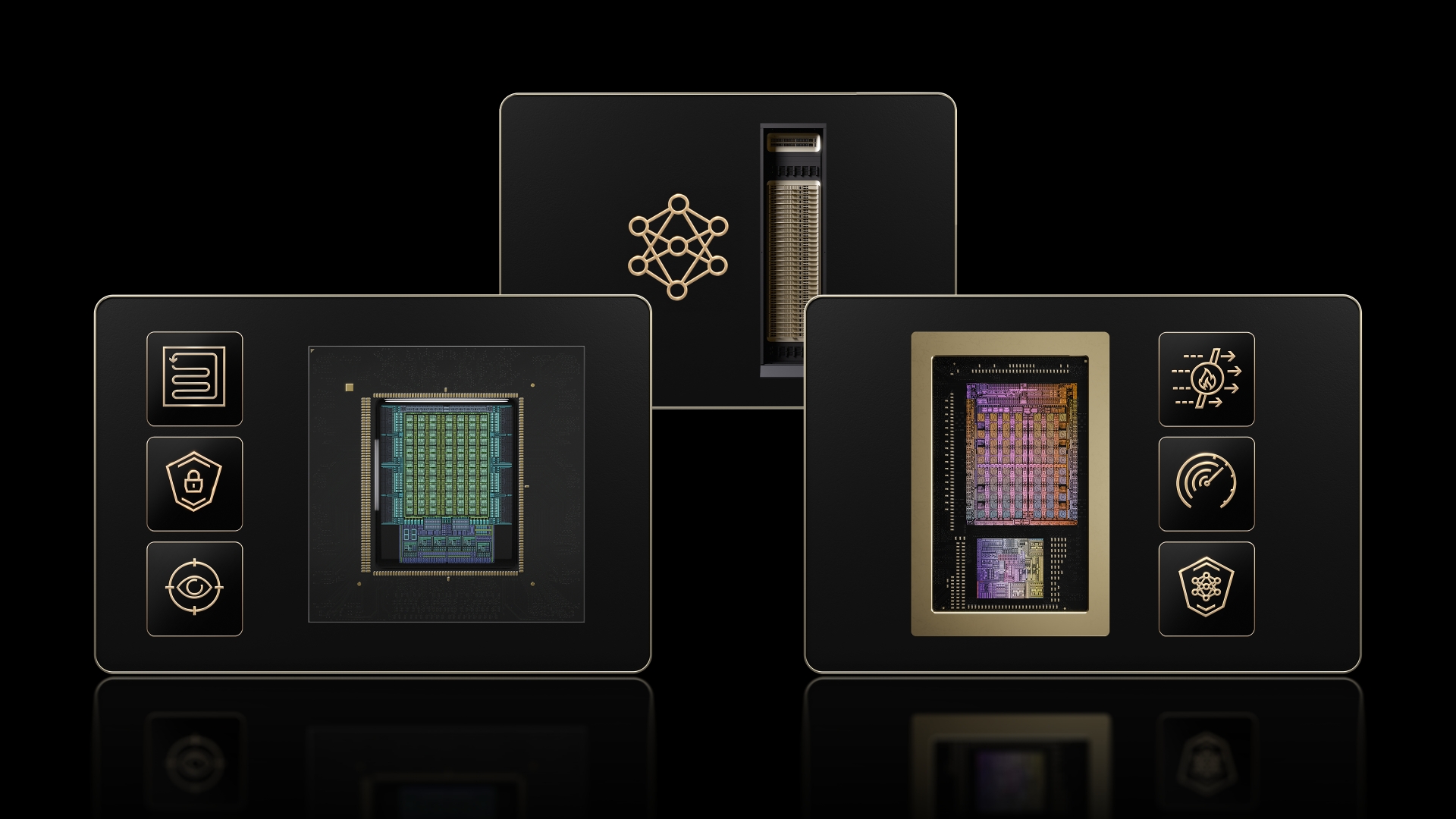
How OpenShell works:
Kernel filtering. It monitors and filters the agent's system calls in the kernel, limits which files it can reach, and checks every network request against policy at binary, destination, method and path level.
Supervisor. Runs outside the sandbox and supplies credentials only where policy allows. The agent never holds the keys.
Policy Prover. Uses formal verification to check that a policy's permissions stay within an organisation-defined ceiling.
Licence. Apache 2.0, with a two-command quickstart. The repo is at version 0.1.
Harnesses supported. Claude Code, Codex, GitHub Copilot CLI, Hermes, LangChain Deep Agents, OpenClaw and OpenCode.
Sentry is the hardware half. It runs on BlueField-4 DPUs in a separate hardware trust domain outside the agent's reach, keeps tamper-evident records, and quarantines an agent that moves outside its boundary in milliseconds. NVIDIA says Sentry lifts agent capacity by up to 20%, and ServiceNow AI Passport can revoke an agent's access across software and hardware in seconds. Sentry and the Open Agent Safety Platform launched on 28 September.
The detail the stage skipped: Sentry has "planned availability early next year". OpenShell ships now. The hardware guard does not.
Who has signed up to the reference architecture:
Model builders: Anthropic, Cohere, Google, Meta, OpenAI, Perplexity, Reflection and SpaceX Super Intelligence.
Clouds and operating systems: AWS, Google Cloud, Microsoft Azure, Microsoft Windows, Canonical, Red Hat and SUSE.
Security: 1Password, Check Point, CrowdStrike, Cisco, F5, Fortinet, Microsoft, Okta, Palo Alto Networks, TrendAI and Zscaler.
Enterprise software: Cadence, Dassault Systèmes, IBM, Palantir, SAP, ServiceNow, Siemens and Synopsys. Banks: BBVA and Santander.
AI clouds: 19 named in a separate post, including Aleria, Cassava, CoreWeave, Crusoe, Firebird, Firmus, G42, Lambda, Nebius, Nscale, Radiant, Verda and Vultr.
Huang announced that Anthropic and NVIDIA are partnering on agents. The product is Claude Managed Agents paired with NVIDIA OpenShell, announced by Anthropic on 28 September: the agent loop runs on a separate server from the sandbox, credentials sit in a vault the agent never sees, and OpenShell denies by default. Notion, Rakuten and Asana are early customers.
The read: OpenAI, Anthropic, Google and Meta on one security standard is the news. It also puts NVIDIA's DPU in the governance path of every agent those labs ship into an enterprise. A security layer that needs BlueField to reach full strength is a security layer that sells BlueField. Agent security gets bought by compliance teams, not developers, and compliance budgets tend to arrive the week after the first big fine.
Knowledge and Tools: CUDA-X Gets a Job
Huang's answer to the idea that AI ends software: "It's exactly the opposite." Every tools company becomes an agents company, and the tools run on NVIDIA.
The NVIDIA Agent Toolkit packages it. Its knowledge layer, the Agent Knowledge Foundation, bundles CUDA-X data libraries (cuDF, cuGraph, cuML, cuOpt, cuVS), a new Auto-Ontology tool (ontology being the buzzword of the year, now with a tool that generates one), Nemotron Retriever and the Kumo models. NVIDIA's examples: SAP's fine-tuned reranker ran nearly 3x faster, and ServiceNow cut reranking latency by nearly a quarter.
On the tools side, Huang said NVIDIA has "350 other libraries". NVIDIA's own October blog says "more than 1,000 ready-made CUDA-X libraries and models". The Berlin speed-ups NVIDIA put in writing: Synopsys S-Litho up to 40x on imec's model, and Infineon 12x in 3D breakdown simulation.
Three demos made the case:
Lila Sciences. Agents design a candidate B-cell lymphoma therapy, run virtual experiments with BioNeMo, then hand the best candidates to an automated lab.
Siemens Electronics Factory Erlangen. Agents plan production and generate inspection programmes. The achieved figure is 40% less inspection calibration time and an estimated 20% cost saving. The "up to 85% less engineering effort" in Siemens' release is a target. Siemens is putting €500 million into the Erlangen campus through 2030. That is Siemens' money, not NVIDIA's.
Dassault Systèmes. LEO and AURA virtual companions, on Nemotron, drive CATIA and SIMULIA agents to redesign and virtually test a car door.
The read: knowledge and tools are the two parts of the agent a company already owns. NVIDIA's bet is that owning the libraries that make them fast is worth more than owning the model.
RTX Spark and DGX Station: The Desk Gets a Petaflop
"In the year 2016, I delivered one petaflops and 128 gigabytes to a small company called OpenAI." It took two people to carry upstairs. RTX Spark fits under one arm.
RTX Spark laptops went on sale on 16 October: a Blackwell RTX GPU paired with a Grace CPU, up to 1 petaflop of FP4 and up to 128GB of unified memory, on Windows. Launch machines come from ASUS, Dell, HP, Lenovo, Microsoft and MSI. The price depends on which NVIDIA page is read: the press release says from $2,599, NVIDIA's blog says from $2,399.
The chip inside is the N1X, TechRadar reported. NVIDIA's own release does not name it. Huang said it took four years.
DGX Station for Windows is the deskside version: GB300 Grace Blackwell Ultra, up to 748GB of coherent memory (Huang said 754), up to 20 petaflops of FP4, local models up to a trillion parameters. It arrives in Q4 2026 from ASUS, Dell, GIGABYTE, HP, MSI and Supermicro. No price is published.
The read: the five-part agent stack needs somewhere to run before it runs in a factory. NVIDIA wants that somewhere to be a laptop it designed, running OpenShell, with CUDA tools already installed.
Robotaxis: Hyperion Picks Up Europe
"Robotaxis are the first mass-market application of robotics and physical AI." Huang's claim in the Berlin release. The fleet numbers say Europe is still at the start of that.
NVIDIA Hyperion is the standard sensor-and-compute kit NVIDIA wants every car maker to build to. The Hyperion 10 spec: 14 cameras, 9 radars, 12 ultrasonic sensors and lidar, on two DRIVE AGX Thor chips. Huang said three lidars on stage. NVIDIA's spec page lists one.
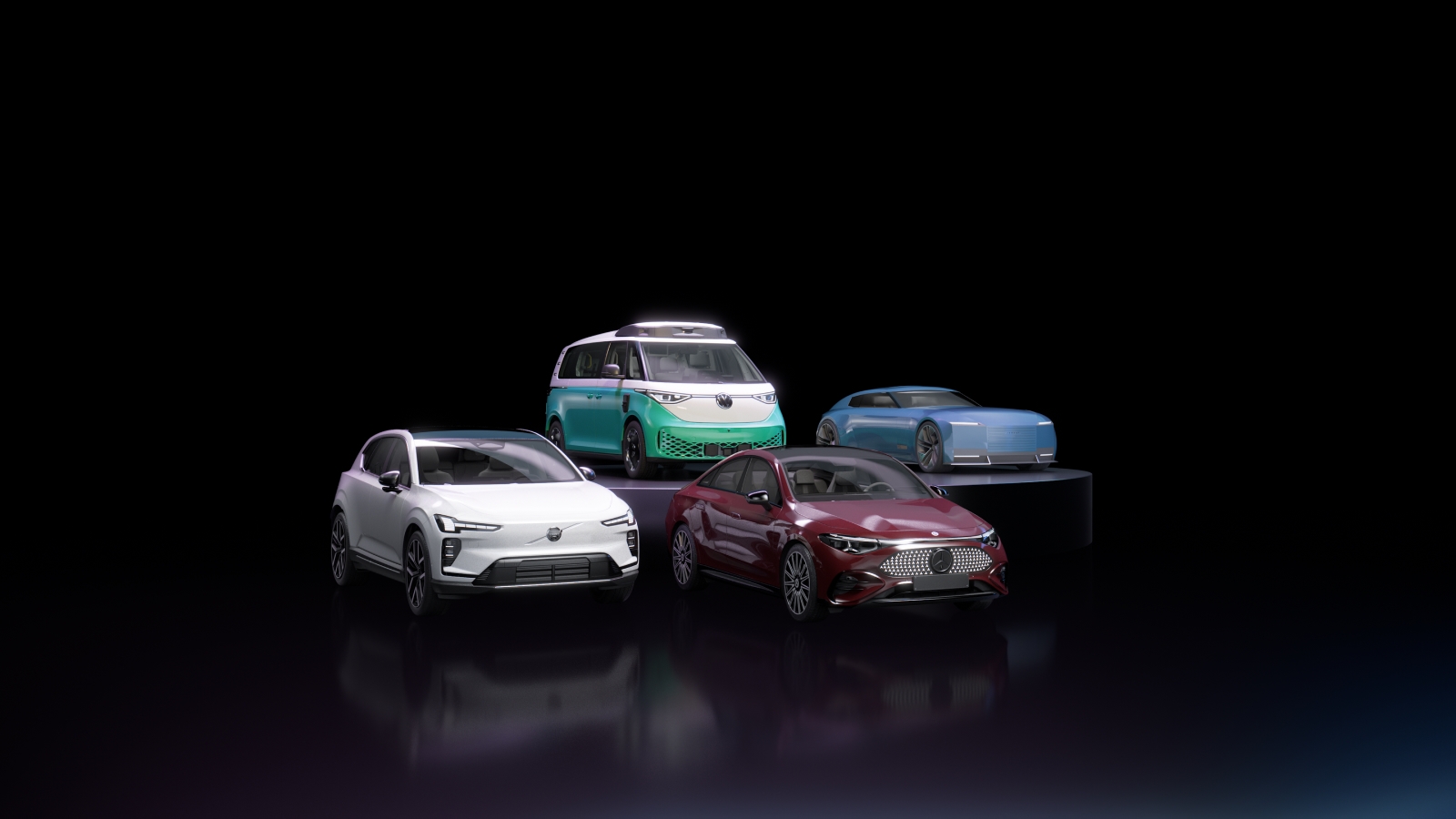
Huang announced "four more" brands. What the release says:
Volkswagen Commercial Vehicles: the autonomous ID. Buzz AD platform on Hyperion.
Volvo Cars: adopting Hyperion and the Alpamayo Stack, debuting in a next-generation car. No fleet is mentioned.
Mercedes-Benz: extending its Hyperion and Alpamayo work to L3 and L4.
JLR: named only as a member of the Halos SAFE safety ecosystem. No JLR car is on Hyperion in any release.
The fleets:
Bolt picked the Alpamayo Stack for a European rollout of at least 25,000 L4-capable future Lucid vehicles, with data collection in Madrid from 2027, subject to approval.
Uber and NVIDIA are building a Cosmos-powered data factory for AV training.
Porsche runs a VW Group data flywheel on Azure. Einride, TIER IV with TU Munich, Aptiv, Valeo and Schaeffler are also in the release.
Huang sized the prize as a trillion miles a year at "a dollar or two per mile". NVIDIA has published no source for either figure.
The read: Hyperion is the NVL72 play applied to cars. Standardise the box, let every brand build to it, and own the software layer they all share. The passenger will never know which chip is driving. The car maker will know exactly who it pays.
Humanoids, Ducks and the Three Computers
The reference humanoid NVIDIA showed is a German company's product. NVIDIA announced plans to invest in that company the same week.
Agile ONE SN from Munich's Agile Robots is a full-stack reference humanoid preconfigured with Isaac GR00T on Jetson Thor (2,070 FP4 teraflops, 128GB). It stands 1.40m, weighs 40kg, has 31 degrees of freedom and carries 3kg per arm. It is available in early 2027. Huang said the first quarter. Agile Robots is one of four German startups in which NVIDIA announced planned investments on 19 October.
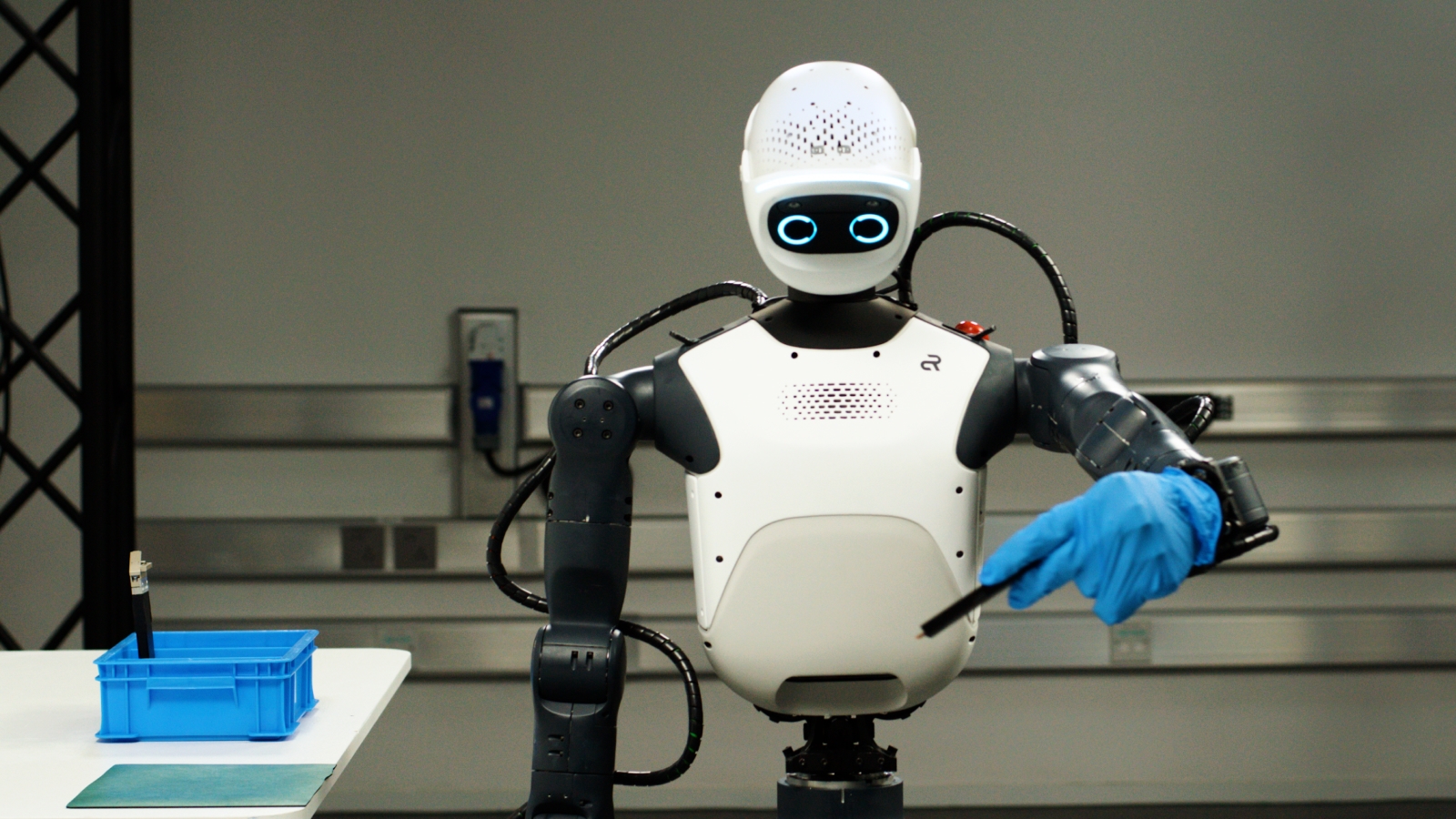
The robotics model is three computers: one to train the AI, one to let it practise in a digital twin (Omniverse), one inside the robot. Isaac Lab 3.0 is now generally available and open source.
The stage closer was Microduck, a 25cm open-source robot from Hugging Face's Pollen Robotics, built with Isaac Lab, Isaac Sim and Newton. It sells at $399 and sold more than 10,000 units in its first week. Huang told the audience to go and order one. NVIDIA agreed to buy Hugging Face for $12.93 billion on 3 September, pending regulators, with completion expected in H1 2027. (A disclosure line would not have gone amiss.)
The demo that trained it ran on an RTX Spark laptop: Hermes as the harness, FreeCAD, Blender and Isaac Sim as the tools, training burst to the cloud. The models were Nemotron for planning and OpenAI's GPT-6 Astra for the modelling and scene work. NVIDIA's own showcase handed the hard part to a closed OpenAI model.
On adaptive radiotherapy, which Huang called a form of robotic surgery, the partner is Siemens Healthineers and Varian. It is a research collaboration, not a product.
Telcos: The Cell Tower as an AI Factory
Huang predicted that every telco "will in the future evolve into a distributed AI network". The evidence so far is one phone call.
T-Mobile completed the world's first AI-RAN call on a live network in Bellevue, Washington, with NVIDIA and Nokia. It ran at a commercial cell site on T-Mobile's production 5G network, Nokia radios and anyRAN software, over NVIDIA's ARC platform. Huang described it as NVIDIA making the call. It was T-Mobile's.
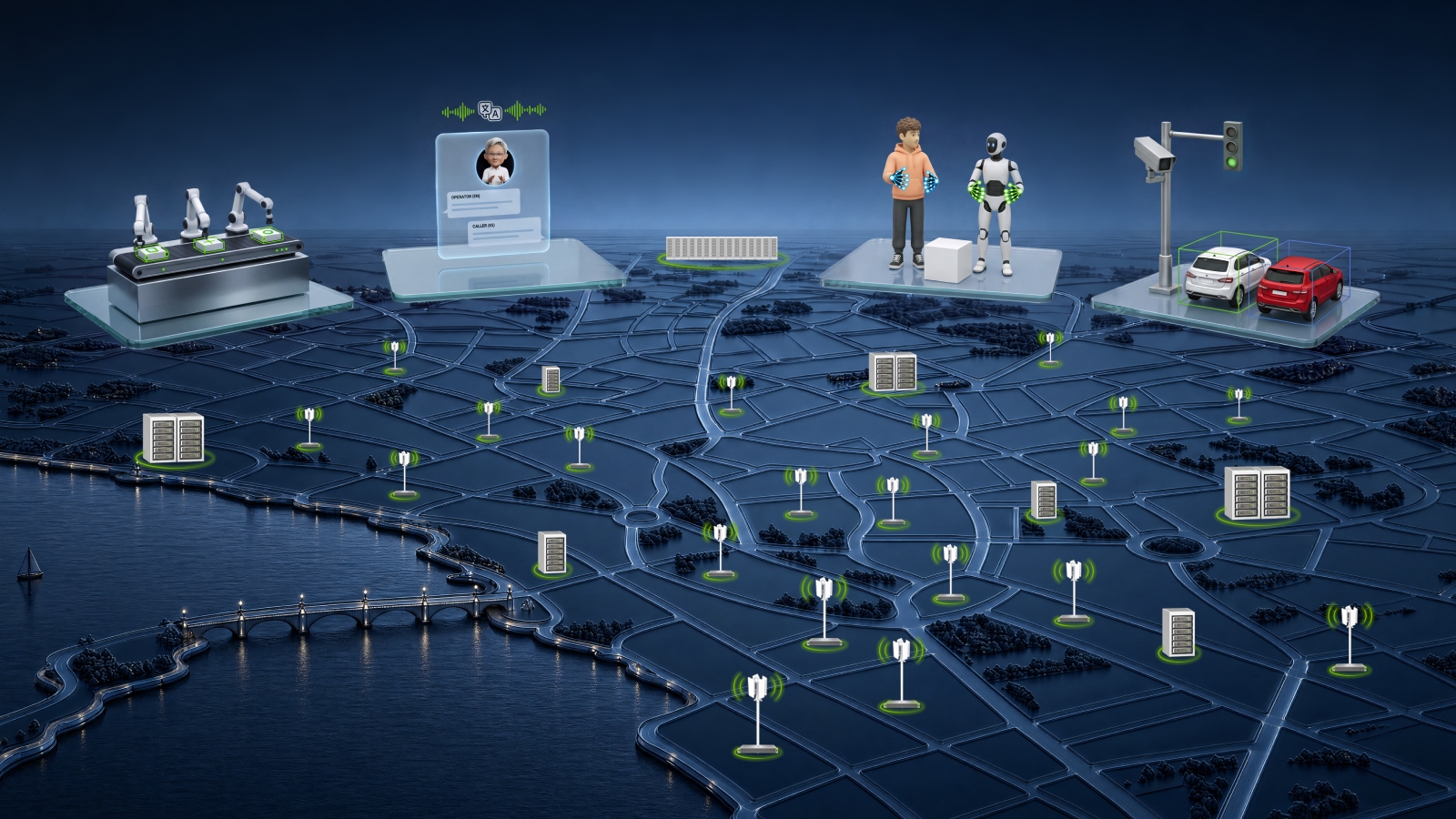
In Europe, Elisa ran what it calls Europe's first AI-RAN field trial and targets commercial service in 2027. BT (Birmingham) and Deutsche Telekom trials follow in 2027. NVIDIA counts nearly 20 operators with AI-RAN collaborations. New ARC configurations pair RTX PRO 6000 Blackwell Server Edition GPUs with x86 or Vera CPUs.
Huang put the prize at 100,000 sites and about 100 gigawatts of distributed base stations and data centres. The release does not repeat the figure, and it is not the same 100 gigawatts NVIDIA claimed DSX Flex would free from stranded grid power in March.
The read: 100 gigawatts of cell sites is a supply story told to a demand audience. Base stations are small, scattered and owned by companies that have spent a decade cutting capex. The first commercial service in Europe is a 2027 target.
Europe: The $10 Billion With No Breakdown
"In the last year alone, we've invested nearly $10 billion in Europe." NVIDIA's written version is more careful.
On paper, NVIDIA has "committed nearly $10 billion" to Europe's technology ecosystem, or made "a nearly $10 billion commitment to support companies". Committed, not invested. TT News Agency reported it as $8 billion already invested "in recent years" plus $2 billion of new deals. No NVIDIA page says what the $10 billion contains: equity, compute, the planned $2 billion into Nebius, or the UK compute pledge.
Huang framed Europe's opportunity as NVIDIA's five-layer cake: energy, chips, infrastructure, models and applications. "You don't want to just be consuming the AI, you want to be producing the AI." NVIDIA now sells into every layer except energy.

The pieces that can be counted:
Startups. Huang said 14 new stakes that week. Thirteen are named, all with undisclosed amounts. France: Doctolib, Entalpic, Genesis AI, Pigment. UK: Boltz, Foresight, Hiverge, Prima Mente, Riverlane. Germany: Agile Robots, Avelios Medical, Mirelo, Reflex Aerospace.
UK. A $250 million compute donation for agentic safety research: compute valued by NVIDIA, $50 million a year for five years, delivered through UK NVIDIA Cloud Partners. "Provider selection, technical architecture and commercial terms are to be agreed." Oxford, UCL and Imperial are named.
Sweden. Sferical One, a shared supercomputer for AstraZeneca, Ericsson, Saab, SEB and Wallenberg Investments: two DGX SuperPODs, 1,152 GB300 GPUs. The consortium's money.
Germany. A government declaration of intent on physical-AI models, with a federal contribution reported in the nine figures. Deutsche Telekom's Industrial AI Cloud, about 10,000 GPUs in Munich, has been live since February.
Partners. "More than 12,000", undefined.
The neoclouds Huang name-checked all appear in NVIDIA's DSX release, which explains the roll-call. Nebius (planned $2 billion NVIDIA investment). Firebird, an Armenian AI factory on B200s with plans for more than 70,000 GPUs and 300 MW by end-2027, already backed by CoreWeave and with NVIDIA intending to invest. Cassava, building across Africa. And Mistral, whose €3 billion Series D was led by Samsung with NVIDIA adding to its stake, and whose $830 million of debt for 13,800 GB300s was lent by banks including HSBC. HSBC also opened the keynote as one of nine European companies working with NVIDIA on AI. Small continent.
The EU's own AI gigafactories programme takes bids until 12 November and picks winners in early 2027. NVIDIA announced nothing for it in Berlin.
Elsewhere on the tour:
Media. The EBU is expanding its sovereign standards for public service media with Microsoft Sovereign Cloud, Nebius and Nemotron. Adobe Frame.io cut embedding time about 5x for UFA.
Cities. Nine European cities and regions run NVIDIA-powered agents for urban operations. Côte-d'Or reports operating costs down 10% across more than 500 public buildings.
Spain. The Barcelona Supercomputing Center's AI Factory Accelerator Programme is now in full operation.
Ireland. Startup Ireland launched with a target of 1,000 new startups. NVIDIA is one of more than 30 accelerator partners.
Science. NVIDIA joined the European Commission's AI in Science Enablers Initiative with open models and courseware. No money or GPUs attached.
Sweden. A Stockholm AI lab with Norrsken opens in 2027. Size undisclosed.
The read: count what each "sovereign" European deal is built from. The silicon is NVIDIA's in every one. The software layer is increasingly NVIDIA's too: Nemotron, DSX OS, Omniverse. NVIDIA holds or plans stakes in Mistral, Nscale and Nebius, and the flagship names carry Korean, American and Japanese capital. NVIDIA's hardware, NVIDIA's software, NVIDIA's money. Sovereignty, for now, mostly describes where the building stands.
Said on Stage vs on Paper
Keynotes round up. These are the claims made on stage in Berlin that NVIDIA's own paperwork does not support:
Said on stage | What NVIDIA published |
|---|---|
DSX POD: 4 to 5 months down to about a month | Six months to as little as 14 days, once site utilities are ready |
20 petaflops per Rubin GPU | |
Vera Rubin is 30 times Blackwell | Over 30x throughput per MW against GB300, on one benchmark |
Vera: eight instructions per clock, world's first LPDDR memory system | |
350 CUDA-X libraries | |
Invested nearly $10 billion in Europe in the last year | "Committed nearly $10 billion"; no breakdown |
14 startup investments last week | 13 named, no amounts |
Three lidars on Hyperion | One lidar on the Hyperion 10 spec page |
Agile ONE reference robot in Q1 2027 | |
DGX Station: 754GB | |
NVIDIA made the first commercial call on T-Mobile's network | T-Mobile made the first AI-RAN call on a live network, with NVIDIA and Nokia |
Most of these are rounding, a misremembered spec or a keynote shorthand. One is not. The size of the European commitment is a number investors and governments will repeat, and the stage version is the generous one.
San Jose to Berlin: What Shipped, What Slipped, What Went Quiet
Seven months ago, NVIDIA made a list of promises. Here is what happened to them.
San Jose commitment (March 2026) | Status in October | What happened |
|---|---|---|
Vera Rubin from partners in H2 2026 | Delivered | Production shipments began in August; about 20% of Q3 data centre revenue expected |
First deployment at Microsoft Azure | Delivered, with a caveat | March was a lab validation bring-up; racks running at five clouds by August |
Groq 3 LPX in H2 2026 | On track | Full production 24 August; volume shipments guided for Q3, Nebius first; no shipment confirmed yet |
BlueField-4 STX from partners in H2 2026 | No update | Security features added in Q2; no dated partner shipment |
"$1 trillion" for Blackwell and Vera Rubin through 2027 | Restated | It was revenue NVIDIA saw from 2025 to 2027, not purchase orders. Replaced in August by a preliminary 70% revenue growth outlook for FY28 |
Vera Rubin Ultra and Kyber in 2027 | Reported slip | SemiAnalysis reported Kyber moving to 2028; NVIDIA: "Our roadmap is intact." Not mentioned in Berlin |
Feynman in 2028 | No update | Not mentioned since March |
DSX Max-Q: 30% more infrastructure in fixed power | Renamed and reframed | Now DSX MaxLPS: same tokens on up to 30% less power |
DGX Station in spring 2026 | Delivered | Orders opened in March; a Windows version arrives in Q4 |
DLSS 5 in autumn 2026 | Delivered | |
AWS: more than 1 million GPUs from 2026 | Expanded | An additional 2 million GPUs through Q2 FY29 |
Berlin reused most of San Jose's hardware and changed almost everything about how it was sold.

March's breakdown is Issue #97. Topic by topic:
Topic | San Jose, 16 March | Berlin, 21 October | Verdict |
|---|---|---|---|
Vera Rubin | Seven chips, five racks, shipping H2 2026 | Shipping since August; same tray and cooling demo | Repeated, now delivered |
Factory delivery | DSX reference design and Omniverse digital twin | DSX POD: containerised factories, six months to 14 days, early 2027 | New |
Power software | Max-Q: 30% more infrastructure in fixed power | MaxLPS: same tokens on 30% less power | Reframed |
Cost of a gigawatt | $40bn for land, power and shell | About $50bn on stage, against NVIDIA's own $60bn. Probably a slip | Reframed |
Headline number | $1 trillion through 2027 | Not mentioned; replaced in August by a 70% FY28 growth outlook | Dropped |
Performance claim | Blackwell 35x per watt, "closer to 50x"; demand up 1,000,000x | Vera Rubin 30x Blackwell; performance up 1 million times in 10 years | Reframed: demand became performance |
Groq | $20bn deal, 35x tokens per MW with LPX, its own section | One line: "a decode accelerator" | Quiet |
Token economics | Free to premium tiers, $3 to $150 per million tokens | Absent | Dropped |
Roadmap | Rubin Ultra and Kyber 2027, Feynman 2028, Space Module | Not shown | Dropped (Kyber reported slipping to 2028) |
Storage | BlueField-4 STX and CMX context memory, its own section | Named in the platform list only | Quiet |
Agents | NemoClaw: "every company needs an OpenClaw strategy" | The five-part agent, built on OpenShell | Reframed: adoption became control |
Agent security | OpenShell as a runtime inside NemoClaw | OpenShell Reference Architecture with Sentry; OpenAI, Anthropic, Google and Meta signed | New |
Open models | Nemotron 3 and an eight-lab Nemotron Coalition | Nemotron 3.5, Retriever and Kumo, with open data and recipes | New models, same strategy |
CUDA-X | 1,000 libraries, 100+ new | "350 other libraries" | Inconsistent |
Autonomous driving | BYD, Geely, Isuzu, Nissan; Uber in 28 cities by 2028 | VW Commercial Vehicles, Volvo, Mercedes; Bolt plans 25,000 Lucids | New brands, same platform |
Robotics | 110 robots on display, an Olaf demo | Agile ONE SN reference humanoid, Microduck | New |
Telcos | AI-RAN partnerships with Nokia and T-Mobile | First AI-RAN call on a live network | Delivered |
PCs | DGX Spark and DGX Station; NemoClaw on RTX PCs | RTX Spark laptops on sale; DGX Station for Windows | New |
Europe | Nebius $2bn; Nscale and Mistral among Vera Rubin customers | Nearly $10bn committed, 13 named startups, UK $250m in compute | New |
Water and supply chain | Not covered | 54m litres a day saved at 2 GW; $1.1bn prepaid to KYEC | New |
Graphics | DLSS 5, "the GPT moment for graphics" | Absent | Delivered in September |
What is new is almost all delivery and control: containers, prepayments, a security standard, laptops on sale. What went quiet is everything forward-looking that carried a number in March: the $1 trillion, token pricing, Groq's 35x, Kyber, Feynman. Three months after SemiAnalysis reported Kyber slipping, the roadmap slide stayed off the stage.
The read: same hardware, different buyer. San Jose pitched hyperscalers and US labs on demand. Berlin pitched European industry, governments and grid operators on delivery, water and control.
The Numbers That Matter
NVIDIA (Q2 FY27, reported 26 August)
$96.2 billion: quarterly revenue; data centre $89.0 billion, up 117% year on year
$108.0 billion: Q3 revenue guidance, plus or minus 2%
About 20%: Vera Rubin's expected share of Q3 data centre revenue
About 70%: preliminary FY28 revenue growth outlook
AI factory economics (stated, not reconciled)
167 MW: how much gigawatt Huang misplaced on stage, at NVIDIA's own $60m per MW
About $60 billion: cost of a 1 GW factory, per NVIDIA's 1 October blog
$40 billion: NVIDIA's revenue opportunity per GW on Vera Rubin (Q2 call)
$10 billion: revenue lost to a three-month delay, per Huang
DSX POD and DSX
6 months to 14 days: deployment time at a prepared site
17: partners building DSX POD; deliveries from early 2027
Up to 30%: less power for the same tokens (DSX MaxLPS)
+24% / +49%: measured throughput gains at Lambda and Nscale
54 million litres a day: water saved at 2 GW against cooling towers
45°C: maximum coolant temperature for Vera Rubin
800 VDC: DSX POD power input
Vera Rubin (NVIDIA-claimed)
50 PF: NVFP4 inference per Rubin GPU
3,600 PF: NVFP4 inference per NVL72 rack
Over 30x: throughput per MW against GB300 NVL72 (one benchmark)
Up to 45x: lower cost per million tokens on the same benchmark
5 minutes: compute tray assembly, from nearly two hours
88 cores, 10-wide: Vera CPU
Supply chain
$1.1 billion: NVIDIA's capacity advance to KYEC for US testing
2.5x: substrate capacity over three years
300%+: Amkor interposer capacity growth by end-2028
15x: SPIL co-packaged optics engine capacity by mid-2027
Agents and models
5: elements of an agent, per NVIDIA
Early 2027: Sentry availability
Up to 20%: agent capacity gain from Sentry on BlueField-4
120B / 12B: Nemotron 3.5 Super VL total and active parameters
24GB: Nemotron 3.5 Bolt memory footprint
52% to 83%: Harvey legal benchmark pass rate after post-training (Opus 4.6: 85%)
Physical AI and PCs
25,000+: L4-capable Lucid vehicles in Bolt's European robotaxi plan
14 / 9 / 12: cameras, radars and ultrasonics on Hyperion 10
2,070 TFLOPS: FP4 compute in the Agile ONE SN humanoid
10,000+: Microduck units sold in a week
1 PF, 128GB: RTX Spark laptop
748GB, 20 PF: DGX Station for Windows
Europe
Nearly $10 billion: NVIDIA's European commitment, no breakdown
13: startups named with new planned stakes this month, no amounts
$250 million: UK compute donation over five years, terms to be agreed
1,152: GB300 GPUs in Sweden's Sferical One
12 November: deadline for EU AI gigafactory bids
GTC Berlin
20 to 22 October: show dates, more than 100 sessions
100: watch parties worldwide, per Huang
15,000: people watching live as he spoke, per Huang
17: NVIDIA releases and posts on keynote day
What Does It All Mean?
San Jose was about what NVIDIA can build. Berlin was about how fast someone else can switch it on, and who controls what runs on it afterwards.
DSX POD moves the data hall into the supply chain. OpenShell and Sentry move agent governance into NVIDIA silicon. Open models with open recipes move sovereign AI programmes onto NVIDIA's training stack. Each one takes a cost the customer used to carry, commissioning time, security, model development, and turns it into something NVIDIA sells.
The catch is the dates. DSX POD ships in early 2027. Sentry ships in early 2027. The reference humanoid ships in early 2027. The EU picks its gigafactories in early 2027. Kyber, per SemiAnalysis, now ships in 2028. Capacity isn't real until it is delivered, and a lot of Berlin is a 2027 delivery schedule.
The keynote closed on a Eurovision-style song in which the GPU "works like an asset" and "acts like a cash machine". The investment case, set to music. Lenders will still want the depreciation schedule.
What that means for the people who read this:
For operators: DSX POD resets the bar for time to first token. A neocloud quoting six months to commission a hall will be quoting against 14 days from a container, at least in the brochure. The MaxLPS results at Lambda and Nscale are the numbers to hold vendors to. Most neoclouds already sell the same NVIDIA hardware to the same handful of customers. If every one of them can order the same container, speed stops being the edge and cost of capital decides it again.
For capital allocators: NVIDIA's own figure for a gigawatt has meant $40 billion or $60 billion in seven months, depending on what is counted. Underwrite the line items, not the keynote. The "$1 trillion" is gone, replaced by a 70% growth outlook, and NVIDIA keeps financing both ends of the trade: test capacity at KYEC, equity in the neoclouds that buy its chips.
For the supply chain: the constraint has moved. Substrates, interposers, test and co-packaged optics are where NVIDIA is prepaying, and where the next shortage will show first.
For enterprise buyers: OpenAI, Anthropic, Google and Meta all back the agent security standard, which makes OpenShell a safe default today. The hardware enforcement layer arrives next year and needs BlueField to work at full strength.
The headline was a container. The real story is who owns the keys to what runs inside it.
Forward this to anyone who builds, buys or funds GPU infrastructure.
Sources and further reading
GTC Berlin releases and posts (21 October 2026)
The European tour (12 to 20 October 2026)
Earlier this year
Third party
Also referenced
The protest