

OpenAI's European Stargate programme lasted nine months. Microsoft and Google just split what's left of it.
Norway went to Microsoft on Monday. West London went to Google. An OpenAI spokesperson said the company "continues to explore" an agreement for Norway.
Explore.
The word you use when you've lost the room.
I'm Ben Baldieri, and every week I break down the moves shaping GPU compute, AI infrastructure, and the data centres that power it all.
Here's what's inside this week:
Let's get into it.
The GPU Audio Companion Issue #102
Want the GPU breakdown without the reading? The Audio Companion does it for you, but only if you’re subscribed. If you can’t see it below, click here to fix that.
Microsoft Takes Stargate Norway, Google Takes West London, OpenAI Gets Nothing
Bloomberg reported on Monday that Microsoft has agreed to rent 30,000 NVIDIA Vera Rubin chips from Nscale at a campus inside the Arctic Circle in Narvik, Norway.
The capacity was originally intended for OpenAI and marketed as "Stargate Norway." OpenAI was in talks with Nscale but never reached an agreement. Microsoft's commitment builds on a prior $6.2 billion deal at the same site. Separately, Nscale signed Google to rent capacity at a West London facility running Grace Blackwell chips. That site was previously associated with the now-paused Stargate UK programme.
Sam Altman, July 2025: "I've always said we'd love to bring Stargate to Europe if the conditions are right, and we think we've found that in Narvik."
Finders, it would seem, are not keepers.
Why this matters:
Nscale is no longer OpenAI's European Stargate builder. Its two biggest European sites now serve Microsoft and Google. Nscale is probably better off: both are investment-grade tenants with cleaner capacity commitments. Assuming, of course, that the proposed sites have planning permission (Issue #96).
OpenAI quietly told investors in February that infrastructure spend would be $600 billion by 2030, less than half of the $1.4 trillion previously telegraphed. The Abilene scale-back, Sora shutdown, UK pause, and Norway walk-away are the visible expression of that downward revision.
Microsoft has now caught three OpenAI Stargate pullbacks in three months. Abilene expansion (700MW, March). Norway (30,000 Vera Rubin chips, this week). Google picked up West London. The company that was once OpenAI's exclusive cloud partner is now the primary beneficiary of every OpenAI infrastructure retreat.
Jane Street Commits $6 Billion to CoreWeave Plus $1 Billion Equity Stake
CoreWeave signed three of the biggest AI infrastructure deals in the industry within eight days.
Jane Street committed approximately $6 billion to CoreWeave's AI cloud platform for compute access across multiple facilities, with access to Vera Rubin hardware. Jane Street also made a $1 billion equity investment in CoreWeave Class A common stock at $109 per share. This follows last week's Meta $21 billion expansion through 2032 and Anthropic multi-year agreement for Claude infrastructure.
Why this matters:
Three anchor tenants in eight days: Meta ($21B through 2032), Anthropic (multi-year, phased), and now Jane Street ($6B plus $1B equity at $109/share).
A quantitative trading firm taking a billion-dollar equity position alongside a compute commitment signals something beyond a cloud services purchase.
Jane Street is underwriting CoreWeave's capacity buildout as both customer and investor simultaneously, echoing Jump Trading’s position with Positron AI.
Allbirds Becomes "NewBird AI" With $50 Million and a Press Release
A shoe company is pivoting to GPU-as-a-Service.
Allbirds (Nasdaq: BIRD) announced it is selling its footwear brand and assets to American Exchange Group and executing a $50 million convertible financing facility to pivot into "AI compute infrastructure." The company plans to rename itself "NewBird AI" and become a "fully integrated GPU-as-a-Service and AI-native cloud solutions provider." Stockholder vote May 18.
Why this matters:
$50 million is a modest start, but small starts aren't disqualifying. Sharon AI went public with 432 GPUs online and then landed Canva (Issue #100). The difference is what's behind the cheque. Sharon AI had data centre operations, NVIDIA Cloud Partner status, and an infrastructure team before it listed.
Allbirds has a footwear brand it's selling, a convertible facility from an unnamed institutional investor, and a new name. The structural demand is real. The question is whether a shoe company's board is the right vehicle to capture it.
When a sustainable footwear brand pivots to GPU-as-a-Service, you are no longer in the early innings. You are in the part of the cycle where narrative capital chases diminishing returns through increasingly creative vehicles. The Allbirds shell has a Nasdaq listing, public reporting infrastructure, and a retail shareholder base ready for a special dividend. This is a reverse merger play dressed as an infrastructure strategy. Expect more of these before the cycle turns.
Anthropic Ships Opus 4.7 With Mythos-Derived Cyber Safeguards
Anthropic released Claude Opus 4.7 on April 16, generally available across all Claude products, API, Bedrock, Vertex AI, and Microsoft Foundry.
Opus 4.7 is the first model to ship with cyber safeguards developed from the Mythos training process. Anthropic says it "experimented with efforts to differentially reduce" cyber capabilities during training, and the model ships with automated detection and blocking of prohibited cybersecurity uses. Legitimate security professionals can apply for the new Cyber Verification Program.
Why this matters:
The three-week Anthropic arc is now complete. Issue #100: Anthropic “open sources” Claude Code, Fortune finds Mythos in a public data cache. Issue #101: Anthropic turns the leak into Project Glasswing, a 12-partner consortium with $100 million in credits. This week: the GA model ships with production cyber guardrails. Leak to consortium to production safeguards in 21 days.
On benchmarks: SWE-bench Verified 85.4% (vs Opus 4.6's 80.8%), CursorBench 70% vs 58% (per Cursor's CEO), and XBOW's visual acuity benchmark jumped from 54.5% to 98.5%.
Anthropic is now running a three-tier model stack that gates capability behind trust, not price. Mythos Preview ($25/$125, restricted to vetted Glasswing partners). Opus 4.7 ($5/$25, GA, cyber-safeguarded). Sonnet 4.6 (workhorse). The pricing signal is deliberate: you can buy the better model at the same price as the old one, while the “dangerous” model costs five times more and requires verification.
Meta and Broadcom Expand MTIA Custom Silicon Partnership to 1GW+
Meta is now running two parallel silicon strategies at gigawatt scale simultaneously.
Meta and Broadcom announced an expanded partnership to co-develop multiple generations of MTIA custom AI chips. The first phase exceeds 1GW of commitment. Broadcom will handle chip design, advanced packaging, and networking via its XPU platform.
Why this matters:
Meta extended CoreWeave to $21 billion this month for NVIDIA Vera Rubin capacity. The same month, it committed 1GW+ to Broadcom custom silicon. Both strategies are live, both are at gigawatt scale, and neither replaces the other.
The MTIA roadmap (Issue #96) runs MTIA 300 through 500 through 2027. Vera Rubin ships through CoreWeave starting this year. Meta is hedging the transition from NVIDIA dependency to custom silicon by funding both at maximum velocity.
Broadcom's XPU platform now has commitments from Meta (1GW+), Google (TPU co-design), and multiple unnamed hyperscalers. Broadcom is becoming the contract manufacturer for custom AI silicon, as TSMC did for logic chips.
AWS Launches Project Houdini to Cut Data Centre Build Time by 80%
AWS is rewriting the hyperscale construction playbook.
AWS is developing Project Houdini, a modular construction initiative using pre-fabricated 45-foot skids that reduce server installation time from 15 weeks to two or three weeks. Initial module production will run from Topeka, Houston, and Salt Lake City, with the initiative expected to be operational by August. AWS plans to use Houdini for over 100 data centres annually.
Why this matters:
The build-time bottleneck is the constraint nobody talks about. GPU procurement cycles have compressed. Financing has compressed. Construction hasn't. Now, with this approach, AWS has just compressed installation by 80%.
If Houdini works at the stated scale (100+ data centres per year), it changes the calculus for every hyperscaler and neocloud trying to match GPU delivery timelines with facility readiness.
Modular, pre-fabricated, repeatable. Three production sites by August. AWS is treating data centre construction the way it treats server racks: standardised units, parallel production, fast deployment.
SPAN Wants to Turn Your House Into a Data Centre
SPAN, the smart electrical panel company, released a white paper for XFRA: a distributed compute cloud built from GPU nodes deployed in homes.
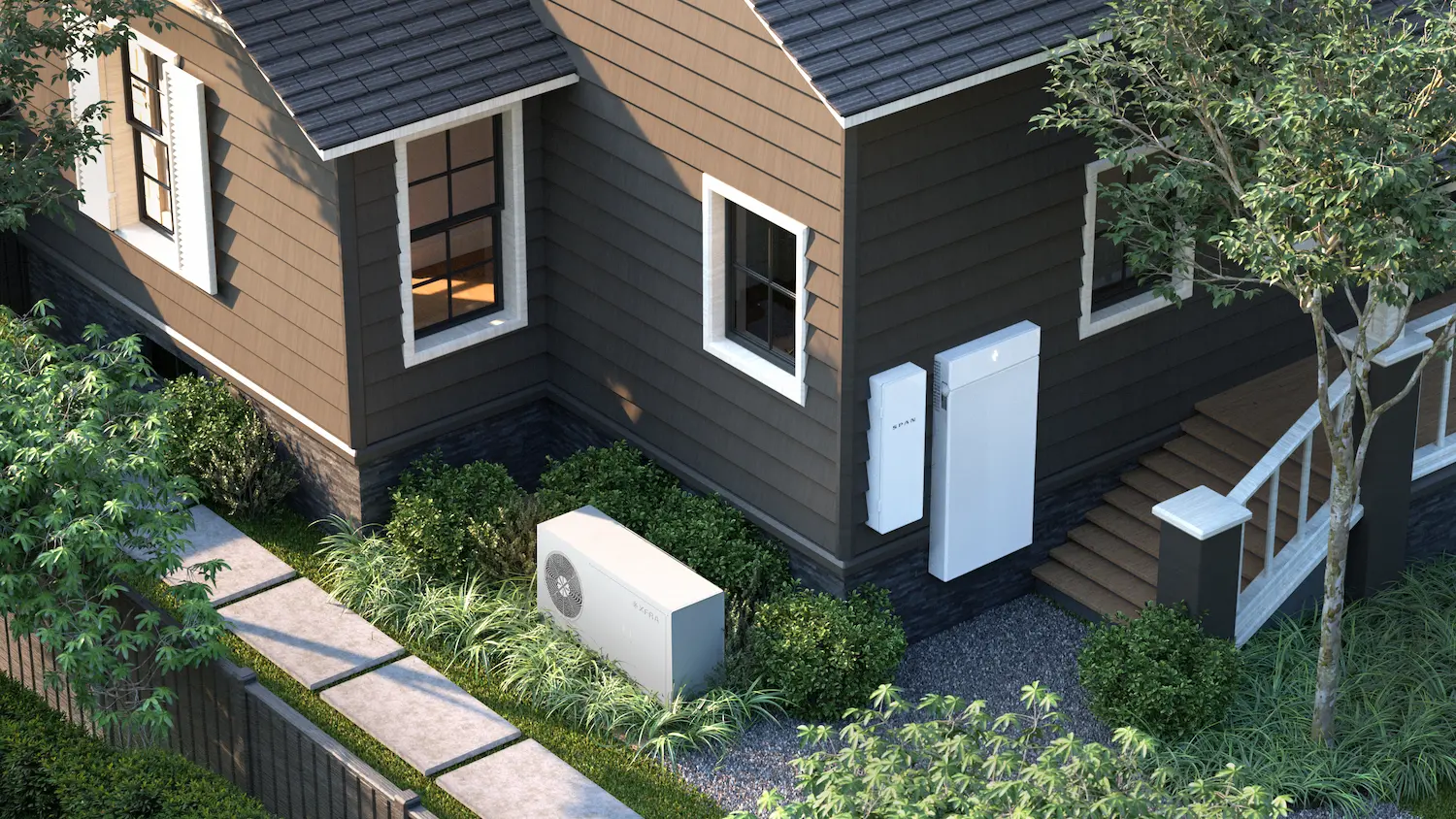
Each XFRA Node pairs 8 enterprise-grade GPUs (liquid-cooled) with a SPAN smart panel and whole-home battery. Workloads are coordinated by XSOL, a fleet orchestration layer that routes jobs based on latency, node health, and real-time energy constraints. Homeowners get the hardware installed at zero cost, plus monthly payments that subsidise energy and broadband bills. Revenue-generating test units are already running. A 100-home proof of concept launches in Q3 2026.
Why this matters:
Residential electrical infrastructure runs at ~40% of peak capacity. That's unused power that doesn't require new grid interconnects, permitting, or utility queues to access. SPAN's UL 3141-certified panel is the metering and control layer that makes it safe to tap.
Compare to NewBird AI. Both are non-traditional entries into GPU infrastructure. One has a Nasdaq listing, $50 million, and a name change. The other has UL-certified hardware in homes, revenue-generating test units, utility relationships, and a 36-page white paper that names its own risks.
The market is generating its most serious and most absurd infrastructure proposals in the same week. Knowing which is which is the job.
The Rundown
Last week I argued OpenAI was the first frontier lab to hit a wall that isn't compute. This week the market confirmed it.
Microsoft took their Norway site. Google took their London site. Jane Street committed $6 billion to the cloud provider OpenAI doesn't use. Anthropic shipped production cyber guardrails seven days after announcing the Mythos consortium. Meta committed 1GW+ to Broadcom custom silicon the same month it extended CoreWeave to $21 billion. AWS is building data centres from prefabricated skids in three cities. A smart panel company published a better GPU infrastructure thesis than most neoclouds. A shoe company changed its name and purpose, and joined the gold rush.
OpenAI told investors in February that infrastructure spend would be $600 billion by 2030.
The number it had previously telegraphed was $1.4 trillion.
Nobody reported the revision at the time. The European Stargate pullbacks, the Sora shutdown, the Abilene scale-back: these aren't individual decisions. They're a company repricing its own ambitions downward while the rest of the market prices its capacity upward.
The word in the OpenAI spokesperson's statement was "explore."
Three months ago, that word was "announce."
The growing distance between the two is where this story is heading.
See you next week.